Add recurring revenue
Prepaid plans turn one-time restaurant visits into a predictable weekly relationship.
A growth proposal for Maharajah India Cuisine
Turn Maharajah’s strongest dishes into prepaid weekly revenue—using the kitchen, recipes and customer trust already built over nearly four decades.
Skip to the recommendation ↓Prepaid plans turn one-time restaurant visits into a predictable weekly relationship.
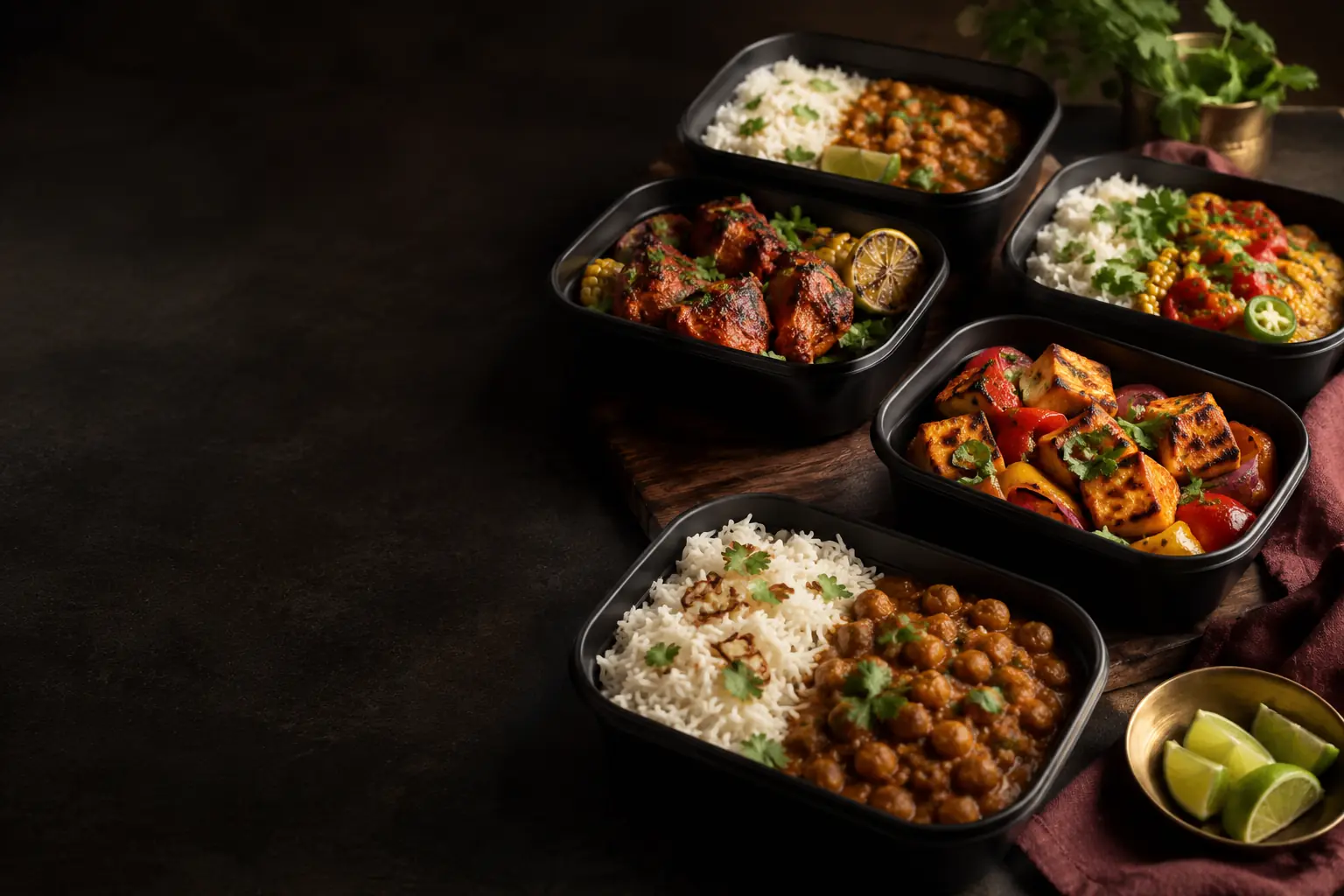
Condense roughly 129 visible dish names into 12 choices powered by eight batch components.
Separate vegetarian and nonvegetarian plans preserve clarity and protect food costs.
Validate demand, cooling, retention and contribution before major equipment or buildout.
Why this can work
Maharajah already has the hard parts: culinary credibility, vegetarian depth, batch-friendly sauces, tandoor and biryani capability, direct ordering, rewards and catering experience.
The meal-prep line should simplify those strengths into a predictable production system—not copy the entire restaurant menu into new packaging.
non-“Popular” public listings, duplicate names and inconsistent descriptions
reusable curry, masala, saag, dal, channa, biryani and tandoori components
clear rotating choices: six vegetarian and six nonvegetarian
Fresh Indian meals differentiate Maharajah from generic fitness food.
Dal, channa, vegetables and paneer form a complete product line.
One sauce family can support multiple vegetarian and meat meals.
Sixty households ordering ten meals each equal 600 meals per week.
Local market signal
Households, healthcare workers and dense workplace drops can support a local subscription business. Demographics make the format worth testing; paid behavior must prove demand.
See the evidence50 customers × 10 meals = 500 meals/week
70 customers × 10 meals = 700 meals/week
Expansion opportunity
Use “Maharajah Masala Street” as a clearly labeled sub-line. Indian recipes stay the production engine; familiar California bowls become the customer-facing format.
Financial case
At the base assumptions, every meal contributes about $4.09 after direct production labor. That is why retention and route density matter more than opening-week excitement.
500 meals/week≈ $3,200 monthly line EBITDA
700 meals/week≈ $6,750 monthly line EBITDA
900 meals/week≈ $10,300 monthly line EBITDA
Fund proof—not hope
The Indo-Mex test is a $3,000–$8,000 carve-out inside the pilot cap—not an additional budget.
Conditional maximum: $30K after the workshop validates the path.
Cumulative; only after contribution, retention and safety gates.
Only after sustained 900+ meals/week or signed contracts.
The decisive next step
Bring ownership, the chef, County EHS guidance and 90 days of POS and labor data together. Validate kitchen capacity, recipe costs, cooling, the 12 launch SKUs and the paid Indo-Mex tasting plan.
A note on confidence: this is a stage-gated business planning model, not a guarantee. Maharajah’s actual recipes, invoices, labor, capacity, permits, cooling performance, tax treatment and customer behavior must replace the public-data assumptions before launch.